The Journal5 min read
Construction Attorney in California: What Law Applies
Learn what California construction law covers, from mechanics liens to defect deadlines, and how to verify who is licensed to handle it.
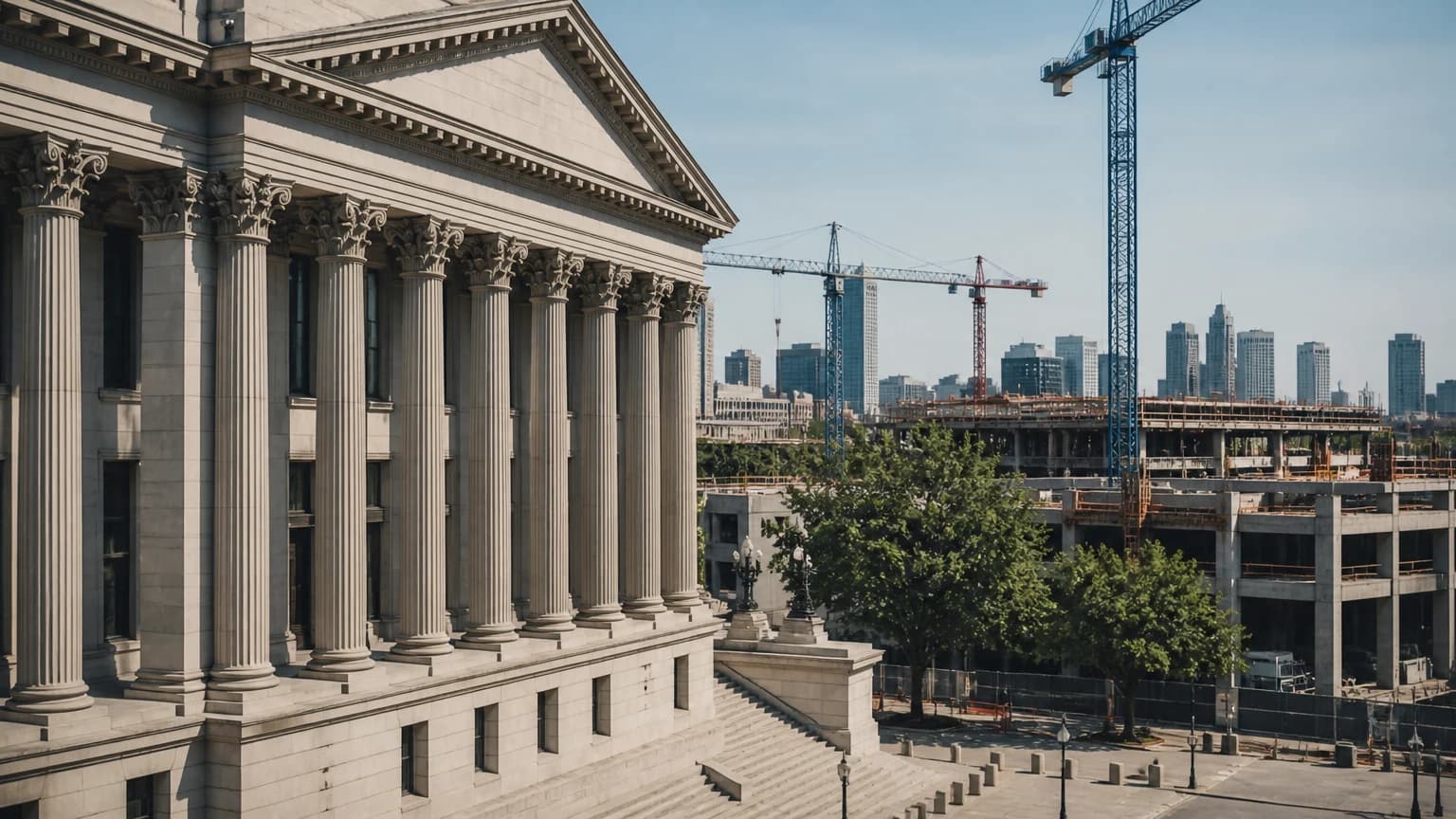
A construction attorney in California handles the legal side of building work: contracts between owners and contractors, payment disputes, mechanics liens, licensing questions, and claims over defective construction. California law defines most of these areas by statute, spread across the Civil Code, the Business and Professions Code, and the Code of Civil Procedure. Every lawyer who practices must hold an active license on the State Bar of California roll.
What does a construction lawyer in California actually handle?
Construction law sits at the intersection of contract, property, and licensing rules. A lawyer working in this area may draft or review construction agreements, pursue or defend claims for nonpayment, record or challenge mechanics liens, litigate construction defect claims, or advise on compliance with California's contractor licensing regime.
The subject matter is broad, so the same title covers very different work. Common areas include:
- Payment and lien disputes: mechanics liens, stop payment notices, and payment bond claims under the Civil Code.
- Contract drafting and disputes: scope, change orders, delay, and termination provisions.
- Construction defects: claims by owners or associations over faulty design or workmanship.
- Licensing issues: whether a contractor was properly licensed for the work performed.
- Public works: prevailing wage, bidding, and bond questions on government projects.
Because the field spans transactions and litigation, some lawyers focus on one lane. The public roll shows who is licensed to practice law in California, but it does not label a lawyer's practice area or measure skill.
What California statutes govern construction work?
California's mechanics lien framework is set out in the Civil Code, primarily Civil Code § 8400 and the surrounding sections, which give contractors, subcontractors, and suppliers a way to secure payment against the improved property. The rules on preliminary notices, deadlines to record, and deadlines to foreclose are strict and detailed.
Contractor licensing is governed by the Business and Professions Code. Bus. & Prof. Code § 7031 bars an unlicensed contractor from suing to recover compensation for work that required a license, and can require repayment of amounts already collected. The Contractors State License Board (a separate agency from the State Bar) maintains the public record of contractor licenses.
Construction defect deadlines come from several places. Code Civ. Proc. § 337.1 and Code Civ. Proc. § 337.15 set outer time limits for patent and latent defects. For most new residential construction, the Right to Repair Act, beginning at Civil Code § 895, sets standards and a pre-litigation process. Which rule applies depends on the type of project and defect, so the specific facts matter.
As of September 2026, California construction law is defined by statute across three codes: the Civil Code (mechanics liens under section 8400 and the residential Right to Repair Act under section 895), the Business and Professions Code (contractor licensing, including the payment bar in section 7031), and the Code of Civil Procedure (defect deadlines in sections 337.1 and 337.15). Deadlines and remedies vary by project type, defect type, and whether the work is private or public. This passage states general California law only. It does not tell any reader which deadline or statute applies to a particular project, does not calculate a filing date, and does not substitute for a licensed attorney reviewing the contract, the timeline, and the public licensing records for the parties involved.
How is a contractor license different from an attorney license?
A direct answer: they are two separate credentials issued by two separate agencies. A contractor license comes from the Contractors State License Board and authorizes someone to perform construction work. An attorney license comes from the State Bar of California and authorizes someone to practice law. One person may hold neither, either, or both.
This distinction matters when you research a dispute. If you are checking whether the person who built a project was allowed to do the work, that is a contractor license question. If you are checking whether the lawyer advising you is authorized to practice, that is a State Bar question. The California Attorney Registry indexes only the attorney roll. For how to read that record, see our guide on how to check a California attorney's record before you hire.
What can the public attorney record tell you, and what can it not?
The State Bar roll is a public record. It shows each licensed attorney's status (active, inactive, or otherwise), the date of admission, and any public discipline history. The California Attorney Registry indexes that record and notes where each fact comes from.
Here is what the record does and does not show:
| The public record shows | The public record does not show |
|---|---|
| License status and admission date | Whether a lawyer is right for your matter |
| Public discipline, if any | A rating, ranking, or score |
| Bar number and name of record | Fees or a quote for your project |
| Practice information the lawyer reports | A referral or a recommendation |
The registry issues no ratings, rankings, or scores, and it does not run a referral service. It reports the public facts and stops.
Where deadlines and costs come in
Construction matters are deadline heavy. Preliminary notices, lien recording windows, and defect claim periods each run on their own clock, and missing one can end a claim regardless of its merits. For a broader look at how California limitation periods work, see California filing deadlines. Fee arrangements also vary widely by matter type; our overview of what a California lawyer costs explains hourly, flat, and contingency structures in general terms. Neither of those applies a deadline or a fee to your specific project.
If you want to confirm that a construction lawyer holds an active California license, or to browse the public roll by name, you can start with the California Attorney Registry. We index the public record so you can read it yourself, and we leave the decisions to you.
Legal information, not legal advice. This brief provides general legal and professional information; it is not a substitute for counsel on a specific situation, and reading it creates no attorney–client relationship.